
Your transportation and logistics news reporter
Provided by AGP
A New Era for Fashion: How the India-New Zealand FTA 2026 is Rewriting the Sourcing Playbook
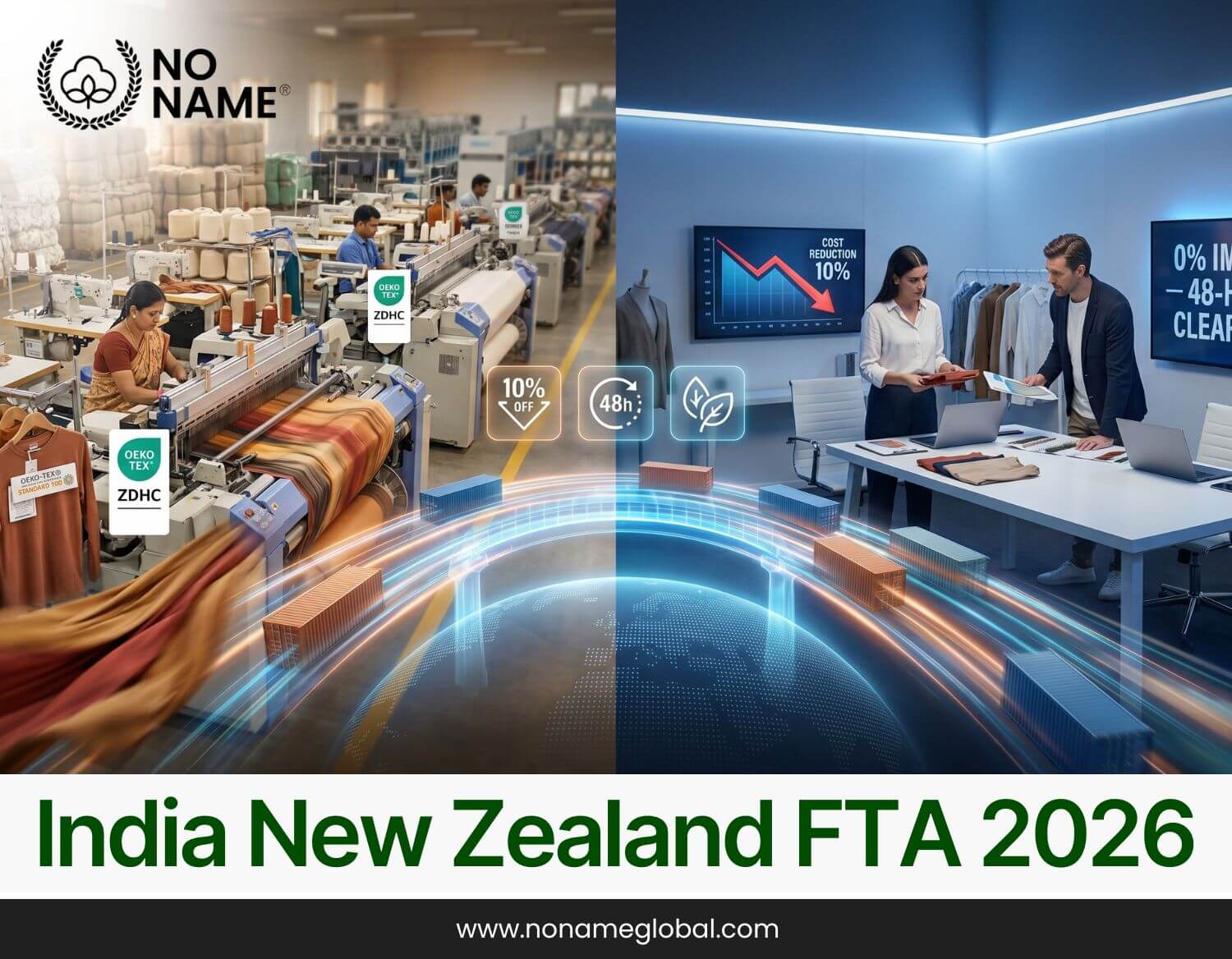
How the India-New Zealand FTA 2026

A New Era for Fashion Through India-New Zealand FTA 2026
new NoName logo
India–New Zealand FTA 2026 enables tariff-free apparel trade, faster sourcing, and cost-efficient garment manufacturing, boosting India as a key fashion hub.
This FTA will create long-term value for global fashion brands, helping New Zealand leverage India’s manufacturing strength, textile heritage, and sustainability to build resilient supply chains.”
FARIDABAD, HARYANA, INDIA, May 6, 2026 /EINPresswire.com/ -- The global fashion industry has entered a defining moment with the signing of the India–New Zealand Free Trade Agreement (FTA) on April 27, 2026. This landmark development is widely seen as a structural shift in how apparel sourcing and textile trade will operate between the two nations, especially for brands in New Zealand seeking scalable and cost-efficient manufacturing solutions.— Kalpana Agrawal
The agreement represents far more than a procedural trade update. It marks a fundamental transformation of the fashion supply chain, enabling faster, more cost-effective, and more integrated sourcing between India and New Zealand.
Rapid and Strategic Trade Alignment
One of the most notable aspects of this agreement is the speed at which it was finalized. Following the resumption of negotiations in March 2025, both governments concluded the framework within nine months, reflecting strong strategic alignment and urgency to modernize trade systems.
For New Zealand fashion brands, the agreement opens direct access to India’s advanced textile manufacturing ecosystem, one of the most comprehensive in the world.
Zero Tariffs Unlock Immediate Cost Advantage
A key feature of the FTA is the removal of tariffs on Indian garment exports to New Zealand. Previously, duties ranging between five and ten percent created cost pressure for importers. With tariffs now reduced to zero, Indian suppliers gain immediate price competitiveness in the New Zealand market.
This shift allows brands to either reinvest savings into design, marketing, and expansion or pass on reduced costs to consumers. In both cases, the landed cost of apparel significantly decreases, strengthening India’s position as a preferred sourcing destination.
India’s Integrated Textile Ecosystem
India offers a vertically integrated textile ecosystem that spans the entire value chain, from fibre production to finished garments. As one of the largest textile producers globally, contributing over two percent to national GDP and employing more than forty-five million people, India provides unmatched scale and depth.
Key strengths include:
Strong raw material base including cotton, organic cotton, polyester, and viscose
Specialized manufacturing clusters such as Tiruppur for knitwear, Surat for synthetics, and Ahmedabad for woven textiles
Advanced processing capabilities including digital printing, modern dyeing systems, and compliance with global standards such as OEKO-TEX and ZDHC
A blend of large-scale industrial production and skilled craftsmanship supported by modern technology
For New Zealand brands, this integrated structure enables better quality control, shorter production cycles, and simplified supply chain management.
Sustainability Becomes Commercially Viable
Sustainability has become a core expectation in the fashion industry, particularly among New Zealand consumers. India is uniquely positioned to support this shift, being the largest producer of organic cotton and a growing hub for recycled and eco-friendly textile innovation.
With the FTA eliminating cost barriers, sustainable materials such as organic cotton and recycled fibres become more accessible at scale. This enables brands to meet environmental commitments without compromising commercial performance.
Wool-to-Garment Value Chain Expansion
A significant opportunity created by the agreement is the integration of New Zealand’s premium wool industry with India’s advanced garment manufacturing capabilities.
Raw wool sourced from New Zealand can now be processed in India into high-quality knitwear and tailored apparel before being re-exported. This creates a fully integrated wool-to-garment value chain that enhances product storytelling, origin transparency, and overall value for global consumers.
Faster Supply Chains and 48-Hour Clearance
The agreement introduces streamlined customs processes, including a 48-hour cargo clearance mechanism. This significantly reduces delays at ports and improves supply chain responsiveness.
Faster clearance translates into shorter lead times, improved inventory management, and reduced overproduction risks. For fashion brands operating in fast-moving retail environments, this agility is a major competitive advantage.
Simplified Compliance and Market Entry
The FTA also reduces regulatory complexity by aligning certification standards and simplifying documentation requirements. This is particularly beneficial for mid-sized and emerging brands that often face barriers when entering international supply chains.
With clearer compliance frameworks and standardized procedures, India becomes a more accessible and predictable sourcing partner for New Zealand businesses.
Strong Growth Outlook for Bilateral Trade
Industry projections indicate that garment exports from India to New Zealand could potentially triple within the next two years. This growth is expected to be driven by both existing brand expansion and new market entrants seeking diversified sourcing strategies.
The agreement positions India as a long-term strategic manufacturing base for New Zealand’s fashion sector, particularly as brands aim to reduce dependency on single-region sourcing models.
NoName: Supporting the New Supply Chain Reality
As this trade corridor expands, manufacturing partnerships will play a critical role in shaping execution outcomes. NoName, a leading clothing manufacturer in India, is positioned as a key enabler in this transition.
Recognized for its export-focused manufacturing capabilities, NoName serves as a reliable clothing supplier to New Zealand, offering scalable production solutions for midsize and large fashion brands. The company specializes in sustainable manufacturing, export compliance, and end-to-end production management, ensuring seamless integration with international supply chains.
Its capabilities include fabric sourcing, product development, quality control, and logistics coordination tailored to global standards. With strong expertise in export documentation and production scalability, NoName supports New Zealand brands in achieving consistent quality and improved turnaround times.
Conclusion
The India–New Zealand FTA 2026 represents a major turning point in global apparel trade. By eliminating tariffs, simplifying compliance, and improving supply chain efficiency, it creates a more connected and competitive sourcing environment.
For New Zealand fashion brands, the agreement unlocks access to India’s deep textile ecosystem while enabling faster, more sustainable, and cost-efficient production models. As the industry adapts to this new framework, India is set to play a central role in shaping the future of global fashion manufacturing.
Pankaj Agrawal
Celestial Corporation
+91 96505 08508
pankaj@celestialfix.com
Visit us on social media:
LinkedIn
Instagram
Facebook
YouTube
India–New Zealand FTA 2026: The Biggest Opportunity in Fashion Right Now
Legal Disclaimer:
EIN Presswire provides this news content "as is" without warranty of any kind. We do not accept any responsibility or liability for the accuracy, content, images, videos, licenses, completeness, legality, or reliability of the information contained in this article. If you have any complaints or copyright issues related to this article, kindly contact the author above.
